
Why What We Do Matters More Than Ever - Super Star Sports
Being on paternity leave gives you something business rarely gives you: space.
- Space to slow down.
- Space to think.
- Space to look properly at what really matters.
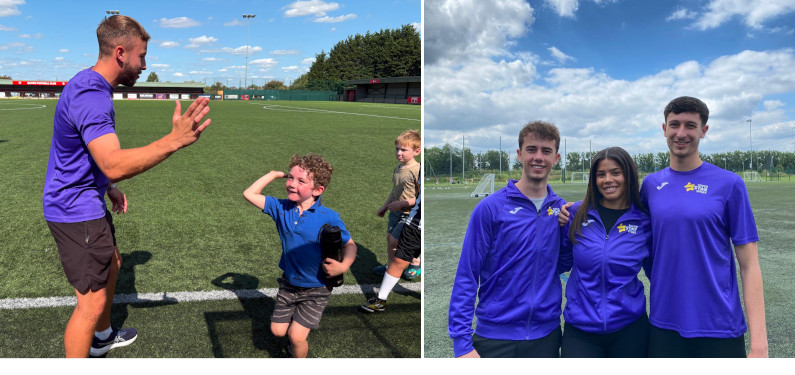
Over the past few weeks, I’ve been at home with my wife, our newborn son, and our little girl, who is nearly three. And when you sit in that family bubble for a while, things become very clear.
Children do not need more time on screens.
- They need movement.
- They need laughter.
- They need confidence.
- And more than anything, they need connection.
They need a team.
That line has been stuck in my head recently:
Your children do not need a screen, they need a team.
Because when you watch young children closely, you realise sport is doing so much more than just filling time. It is helping them learn how to share, how to listen, how to take turns, how to bounce back, how to be brave, and how to feel part of something.
That matters more than ever.
In March 2026, the government published new guidance for parents of under-5s on screen use, following work from the Early Years Screen Time Advisory Group. The message was not about panic. It was about helping families build healthy habits early. Alongside that, the long-standing UK Chief Medical Officers’ advice remains clear: there is not one magic number for all screen use, but families should think carefully about screen habits, sleep, physical activity, online safety, and whether screen use is replacing more positive things.
That point is huge for me.
Because that is exactly where sport comes in.
If a screen is replacing sleep, fresh air, play, movement, teamwork, confidence, and real human connection, we have a problem. If sport is bringing those things back in, we have part of the answer.
The NHS says children and young people aged 5 to 18 should aim for an average of at least 60 minutes of moderate or vigorous physical activity a day across the week. For younger children, the expectation is even more movement woven through the day, not less. Yet Sport England’s latest Active Lives data shows that less than half of children and young people are meeting the recommended level.
That should concern all of us.
Because this is not only about physical health. It is about mental health, resilience, relationships, and communities.
A major systematic review published in 2026 found that sport participation in children and adolescents is consistently linked with better mental health, including higher self-esteem, higher life satisfaction, and lower symptoms of depression and anxiety. It also found stronger and more consistent benefits from team sports than from individual sports.
That makes sense, because team sport gives children something screens never can.
- A role in a group.
- A reason to turn up.
- A sense of belonging.
- A chance to communicate.
- A chance to win together, lose together, and grow together.
That is how stronger communities are built too. Research commissioned by Access Sport found that 97% of children reported a sense of belonging when attending supported sports clubs. That is not a small thing. Belonging changes confidence. Belonging changes behaviour.
Belonging changes lives.
This is why what we do at Super Star Sport matters so much to me — and why we are actively evolving what we deliver across our franchise network.
- Yes, we deliver sports coaching.
- Yes, we run PE, nursery sessions, wraparound provision, holiday camps, and clubs.
But we also recognise that to truly compete with screens, we have to be more engaging, more varied, and more creative than ever before.
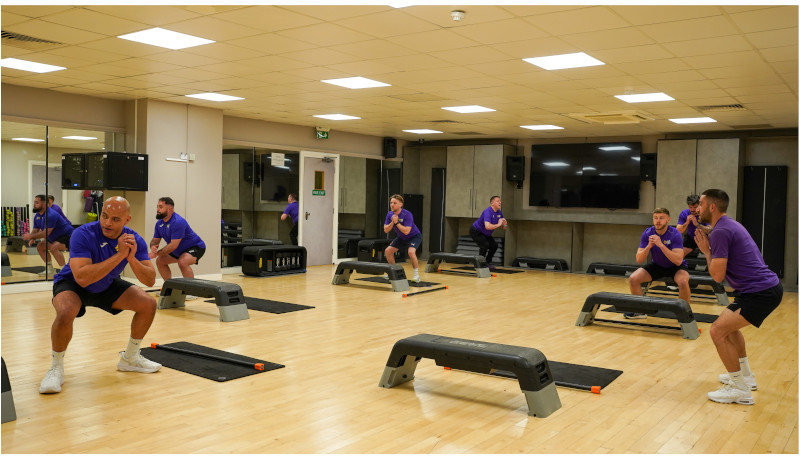
Across our network, we are constantly developing new activities and experiences that capture children’s attention and keep them active. Recently, we have trialled sessions such as soft axe throwing, alongside a wider mix of engaging activities designed to bring something different into schools and holiday camps.
The response has been incredible — with hundreds of schools showing strong interest in these new, safe and exciting activities as part of a broader, more varied offer.
This is a key part of how we support our Super Star Sports franchisees.
We are not just asking them to deliver sport.
We are equipping them to deliver experiences that compete with screens.
- Experiences that children talk about.
- Experiences that children look forward to.
- Experiences that keep them moving.
Right now, Super Star Sport is delivering sessions to more than 25,000 children every week across over 900 locations. That means week after week, our network is helping thousands of children spend more time moving, playing, smiling, and being part of something positive instead of sitting still and switching off into a screen.
And that is not by chance.
It is through ongoing support, innovation, and a clear focus on what children need today — not what worked ten years ago.
As I reflect on that while on paternity leave, it honestly makes me even more proud of the industry we are in.
Because sport is not a luxury.
It is not an add-on.
It is not something children should get only if there is time left over.
It is one of the best tools we have to help children grow into healthy, happy, confident people.
So yes, the government is right to talk more about screen habits. Families need support with that. But the answer cannot just be “less screen time”.
The answer has to be: what are we giving children instead?
At Super Star Sport, we are committed to being part of that answer — supporting our Super Star Sports franchise network to deliver high-quality, engaging, and varied physical activity that genuinely competes with screen time.
- Give them movement.
- Give them encouragement.
- Give them routine.
- Give them positivity.
- Give them safe adults.
- Give them fun.
- Give them a team.
Because your children do not need a screen.
They need a team.
Billy Densham
Network Manager, Super Star Sport